

A Simple Injection Could Help the Heart Heal Itself After a Heart Attack
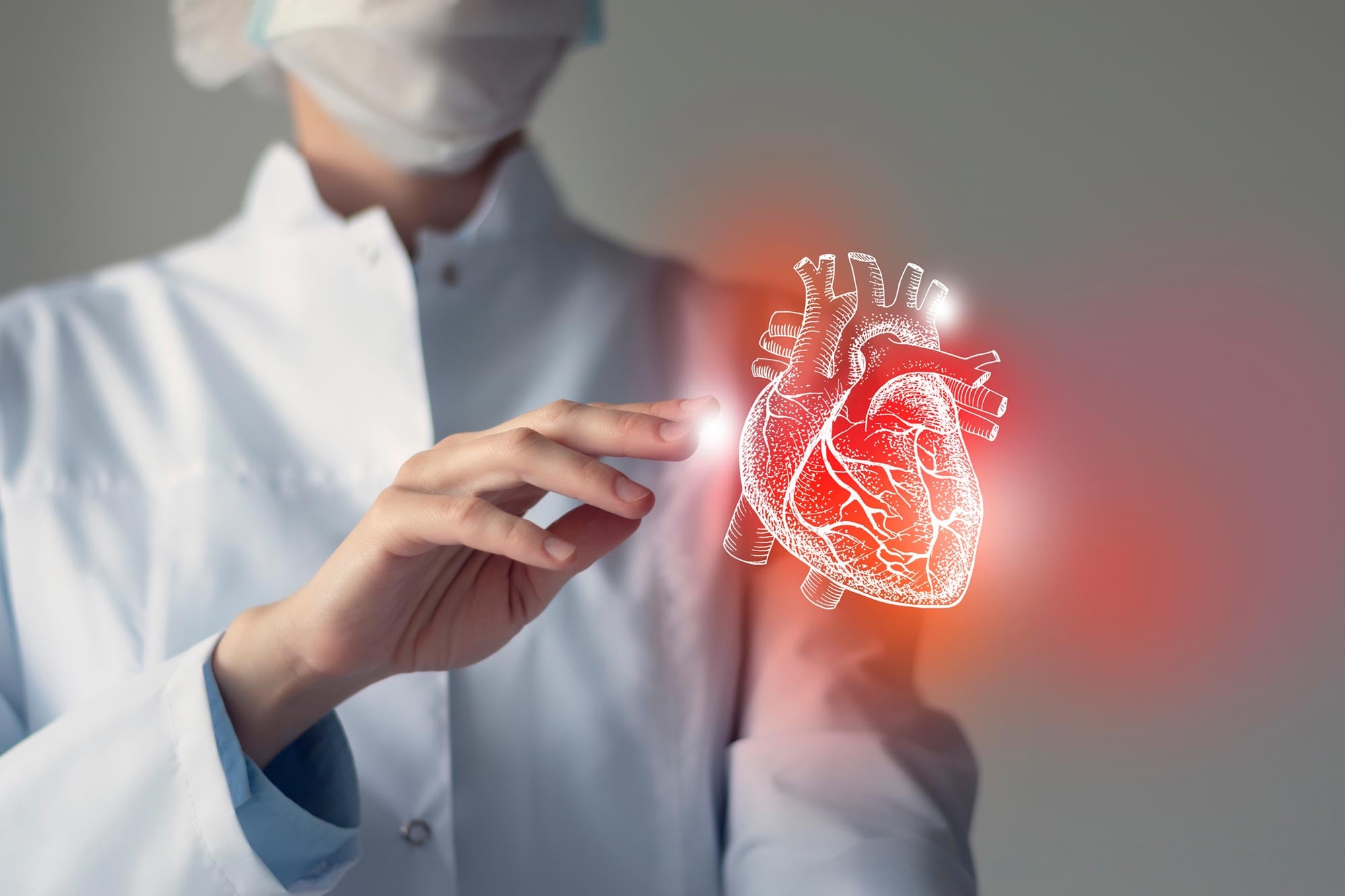
A new RNA-based therapy aims to address one of cardiology’s most persistent challenges: the heart’s inability to regenerate after injury.
After a heart attack, restoring blood flow is often only part of the battle. Even when blocked arteries are reopened, the heart is left with permanent damage because lost muscle cells do not grow back.
“The heart is one of the organs with the least ability to regenerate,” said Ke Cheng, Alan L. Kaganov Professor of Biomedical Engineering at Columbia Engineering. “The spontaneous regeneration power is very, very limited.”
That limitation is a major reason many survivors later develop heart failure. Now, researchers are working on a different strategy, one that does not just prevent further damage but actively helps the heart repair itself.
In a study published in Science, Cheng and his colleagues present an experimental therapy that turns the body into its own drug producer. Instead of delivering medicine directly to the heart, the approach uses RNA to instruct other tissues to generate a healing molecule that becomes active only once it reaches the heart.
“You don’t have to open the chest or send a wire to the heart to deliver this drug,” Cheng said. “In principle, all the clinician needs to do is to inject the particles into the arm.”
For cardiologists like study co-author Torsten Vahl, this shift could address a long-standing gap in care.
“As a clinician who opens up arteries with stents for patients who come to us with heart attacks, I am highly aware that we have a large unmet need for our patients,” Vahl said. “Too many times, they are left with severe heart damage that results later in heart failure.”
In preclinical studies, a single injection reduced scar tissue and improved heart function in both small and large animals. The results suggest a potential path toward therapies that are not only effective but also simpler and more accessible than procedures such as transplants or cell-based treatments.
What newborn hearts know
In the first days after birth, many mammals briefly retain the ability to regrow heart muscle cells. A hormone called atrial natriuretic peptide (ANP) plays an important role by promoting blood vessel growth, reducing inflammation, and limiting scar tissue.
As the body ages, ANP levels drop significantly, and this regenerative ability largely disappears.
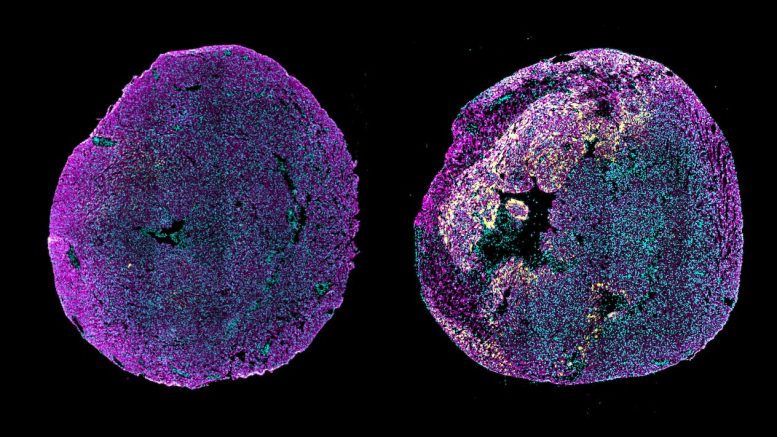
To explore this difference, the researchers compared newborn and adult mice after heart attacks. In newborns, the gene responsible for producing ANP’s precursor increased more than 25-fold. In adults, it rose only about 10-fold, which may not be enough to support repair.
When the team blocked this gene, called Nppa, in newborn mice, the animals lost much of their natural healing ability.
“The whole idea is that we learn from nature,” Cheng said. “The neonatal heart spontaneously produces more of this molecule after a heart attack. That’s probably why young hearts can regenerate themselves. The adult can’t produce a sufficient amount, so we found a way to supplement this to the heart.”
Scientists have long recognized ANP’s potential, but it breaks down within minutes in the body, making it difficult to use as a traditional drug.
The muscle as an RNA drug factory
Getting drugs to the heart in a lasting and minimally invasive way is challenging. Organs like the liver and lungs can naturally absorb certain drugs due to their structure and blood flow. The heart does not have this advantage, making targeted delivery more difficult.
“Because of these challenges, researchers have worked on cardiac drug delivery with infusions directly into the blood vessels of the heart, injections into the heart muscle, and injections into the pericardium, which is the sac surrounding the heart,” Vahl said. “All of these methods are invasive and need to be performed in a cath lab.”
Instead of delivering the drug directly to the heart, the researchers developed a two-step strategy. They first create an inactive precursor in skeletal muscle, which is later activated inside the heart.
The team engineered RNA-lipid nanoparticles carrying instructions for Nppa. When injected into muscle in the arm or thigh, cells begin producing pro-ANP. This inactive molecule travels through the bloodstream until it reaches the heart.
There, an enzyme called Corin converts it into active ANP. Corin is about 60 times more abundant in the heart than in other organs, ensuring that activation happens mainly where it is needed.
“Targeting is based on a specific cleavage of an enzyme that is naturally expressed in the heart,” Cheng said. “The idea is that you don’t have to touch the heart or open the chest. All you need to do is to inject the arm.”
To extend the effect, the researchers used self-amplifying RNA (saRNA), which can replicate inside cells. A single injection continued working for at least four weeks.
“The patient doesn’t have to go to the hospital today and tomorrow,” Cheng said. “They may only have to go once per month.”
Looking ahead
Before moving to human trials, new therapies must work across a range of realistic conditions. Cheng’s team tested their approach in large animals, older mice, animals prone to atherosclerosis, and mice with diet-induced type 2 diabetes.
They also examined delayed treatment by giving the therapy one week after a heart attack, when significant damage had already occurred. The treatment remained effective in all cases.
The research involved collaborators from Columbia’s Department of Biomedical Engineering, along with experts from the Milstein Division of Cardiology and the Institute of Comparative Medicine.
“We tested the drug in different disease comorbidities,” Cheng said. “And we also tested delayed treatment. We hope that, even if a patient had a heart attack weeks before getting the drug, it’s still effective.”
Beyond heart disease, this approach could help treat conditions such as kidney disease, high blood pressure, and preeclampsia.
“Cell damage is a problem that not only affects the heart but many organs,” Vahl said. “If we can prove that this type of therapy can regenerate cardiac cells in the clinical setting, the idea could potentially be transferred to other organs.”
Cheng plans to produce the therapy at the Columbia Initiative in Cell Engineering and Therapy and begin a phase-one safety trial at Columbia University Irving Medical Center.
“We can leverage our in-house resources for manufacturing and then start a clinical trial,” Cheng said. “Columbia can do both.”
Reference: “Single intramuscular injection of self-amplifying RNA of Nppa to treat myocardial infarction” by Kaiyue Zhang, Hongyan Tao, Dashuai Zhu, Zhang Yue, Shiqi Hu, Yiping Wu, Na Yan, Yilan Hu, Shuo Liu, Mengrui Liu, Torsten Peter Vahl, Lauren Sharan Ranard, Xiao Cheng, Alexander Romanov, Jiaming Liu, Savannah Weihang Zhang, Yuan Li, Chao Lu, Ming Shen, Andrew Lewis, Ke Huang and Ke Cheng, 5 March 2026, Science.
DOI: 10.1126/science.adu9394
Funding: American Heart Association, National Institutes of Health
Never miss a breakthrough: Join the SciTechDaily newsletter.
Follow us on Google and Google News.
Source link
